
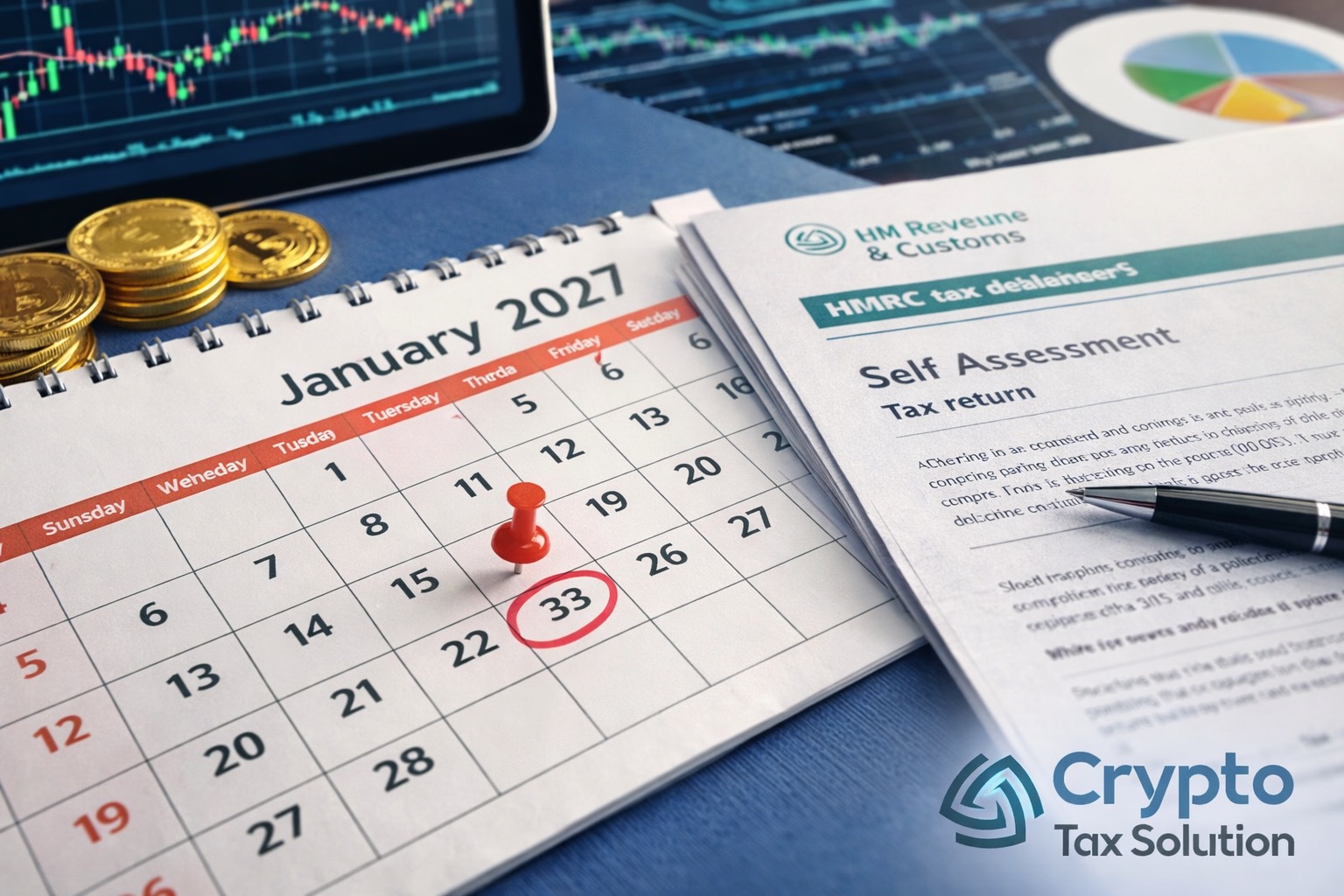
 Crypto tax deadlines UK rules are becoming more important as HMRC increases its focus on cryptocurrency investors.
Many people assume crypto is informal or “outside the system.” It isn’t. HMRC treats crypto as taxable, and missing deadlines can quickly lead to penalties, interest, and unwanted attention.
If you’ve bought, sold, traded, staked, or earned crypto in any way, understanding crypto tax deadlines UK rules is essential.
Key Crypto Tax Deadlines UK You Need to Know
Getting clear on crypto tax deadlines UK starts with knowing the main Self Assessment timeline:
Important dates:
- 5 April 2026 – End of the tax year
- 6 April 2026 – New tax year begins
- 5 October 2026 – Deadline to register for Self Assessment
- 31 October 2026 – Paper tax return deadline
- 31 January 2027 – Online tax return deadline
- 31 January 2027 – Tax payment due
These dates apply whether your crypto activity is simple or complex. Missing them can trigger automatic fines.
What Crypto Activity Needs Reporting?
Crypto tax deadlines UK don’t just apply to selling Bitcoin. HMRC expects reporting across a wide range of activities:
- Selling crypto for GBP
- Swapping one cryptocurrency for another
- Spending crypto (even small purchases)
- Receiving staking rewards
- Getting paid in crypto
- Certain airdrops
Each of these can create a tax event. That’s why crypto tax deadlines UK are tied to activity, not just withdrawals to your bank.
What Happens If You Miss Crypto Tax Deadlines UK?
Ignoring crypto tax deadlines UK can get expensive quickly.
Typical penalties include:
- £100 fixed fine for late filing
- Daily penalties after 3 months
- Additional penalties after 6 and 12 months
- Interest on unpaid tax
HMRC has also increased its ability to track crypto activity through exchanges and international data sharing.
This means late or missing returns are far more likely to be noticed than they were a few years ago.
How to Stay Ahead of Crypto Tax Deadlines UK
The easiest way to deal with crypto tax deadlines UK is to stay organised throughout the year.
Simple steps that make a big difference:
- Keep a record of every transaction
- Track dates, values, and fees
- Use crypto tax software or spreadsheets
- Separate wallets for personal and trading activity
- Review your position before the tax year ends
Waiting until January is where most people run into problems.
HMRC Self Assessment deadlines.
Do You Need to Pay Tax Before the Deadline?
One of the biggest misunderstandings around crypto tax deadlines UK is when payment is actually due.
For most individuals:
- You report your crypto activity after the tax year ends
- But payment is due by 31 January
This means you could owe tax on gains made months earlier, so planning ahead matters.
How HMRC Tracks Crypto Activity
HMRC is no longer relying on guesswork.
They receive data from:
- UK and international exchanges
- Financial institutions
- Blockchain analytics tools
If your records don’t match what HMRC expects, it can trigger a compliance check.
That’s why meeting crypto tax deadlines UK isn’t just about timing — it’s about accuracy too.
Common Mistakes to Avoid
Even experienced investors get caught out by crypto tax deadlines UK.
Watch out for:
- Assuming small gains don’t matter
- Forgetting crypto-to-crypto trades
- Not declaring staking or rewards
- Leaving everything until January
- Losing access to transaction history
These issues often lead to rushed, inaccurate filings.
Final Thoughts: Don’t Let Deadlines Catch You Out
Crypto tax deadlines UK are one of the simplest things to get right — but also one of the easiest to ignore.
Staying organised, understanding your obligations, and acting early can save you time, stress, and money.
Need Help With Your Crypto Tax?
If you’re unsure about your crypto tax deadlines UK or want everything handled properly, we can help.
At Crypto Tax Solution, we specialise in helping UK investors stay compliant with HMRC without the stress.
👉 Visit our website here
👉 Or get in touch for tailored support